
Why penetrations are the weak points
Shingles shed water well when they overlap in an unbroken pattern. Every time something passes through the roof or meets it at an angle, that pattern is interrupted and flashing has to do the job instead. Flashing, pipe boots and sealants are usually the first parts of a roof to wear out, often well before the shingles themselves.
Skylights
Skylights leak for a few reasons: the flashing kit around the unit has failed or was installed incorrectly, the seal between the glass and the frame has broken down, or condensation is forming on the inside and dripping, which looks like a leak but is not one. A careful inspection separates these. If the skylight itself is fine and the flashing is the problem, re-flashing during a repair or replacement is the fix. The photo above is from a McLean project, not Ashburn, and shows roofing work around a skylight.
Plumbing vents and roof vents
Most homes have several plumbing vent pipes through the roof, each sealed with a rubber or neoprene boot. Over years of sun and temperature swings, those boots crack and split, and water runs down the pipe into the attic. On roofs from Ashburn's 1990s and 2000s building boom, original boots are often worn even where the shingles look acceptable. Box vents, exhaust fan vents and other roof vents have their own flashing that can loosen or rust.
Chimneys
Many Ashburn homes have no masonry chimney, but some have one, and others have a framed chase for a gas fireplace or flue. Either way, the joint where the chimney meets the roof needs step flashing and counter-flashing. Sealant smeared over a gap is not a substitute, and it eventually dries out and opens up. A chimney cricket, a small peaked structure behind a wide chimney, helps keep water from pooling on the uphill side.
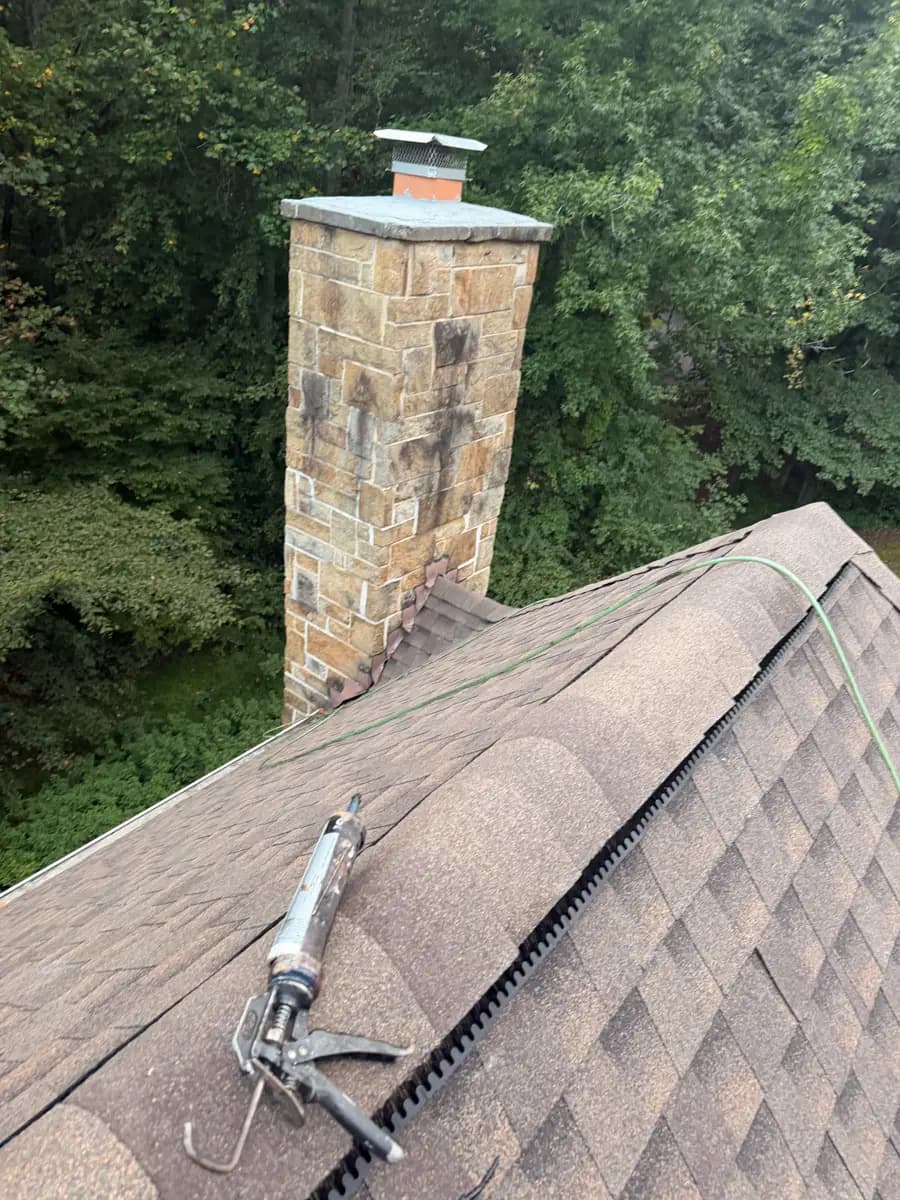
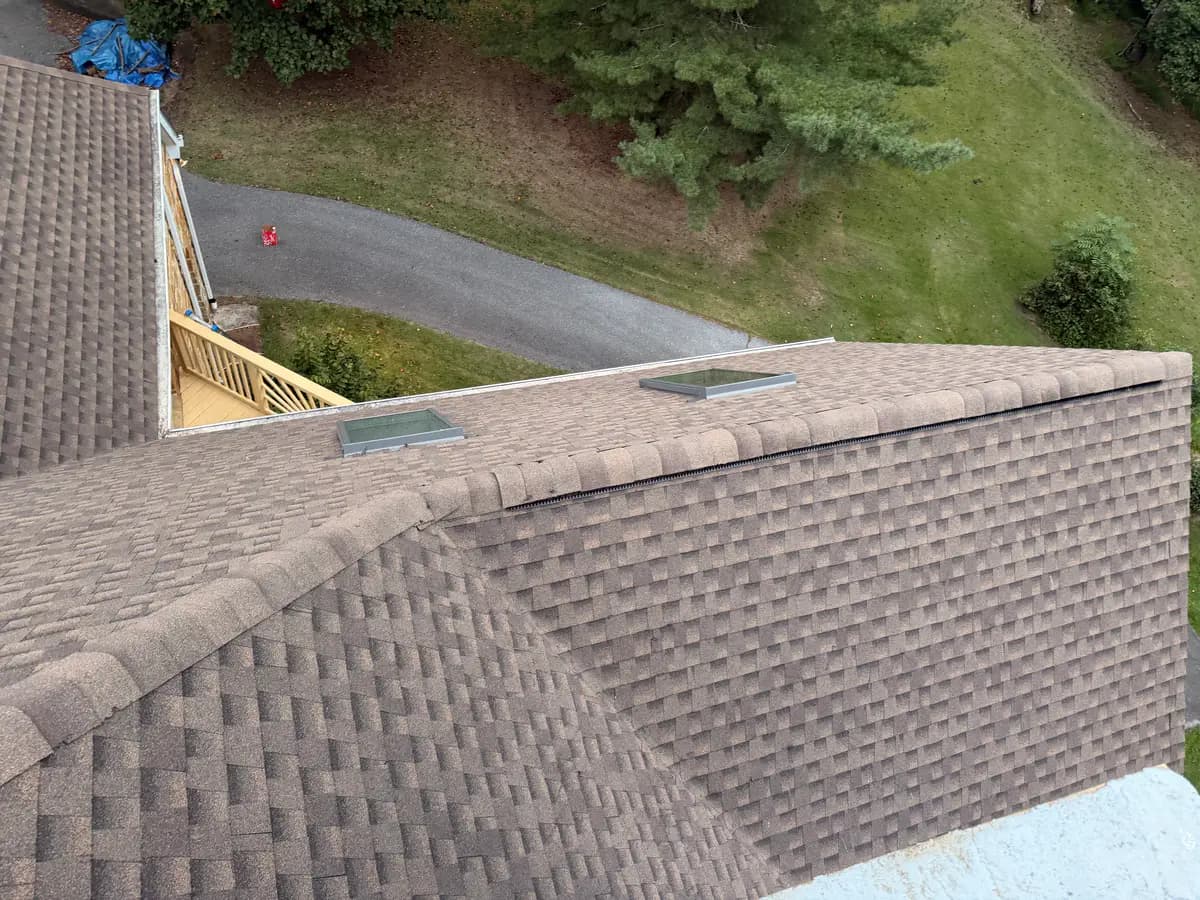
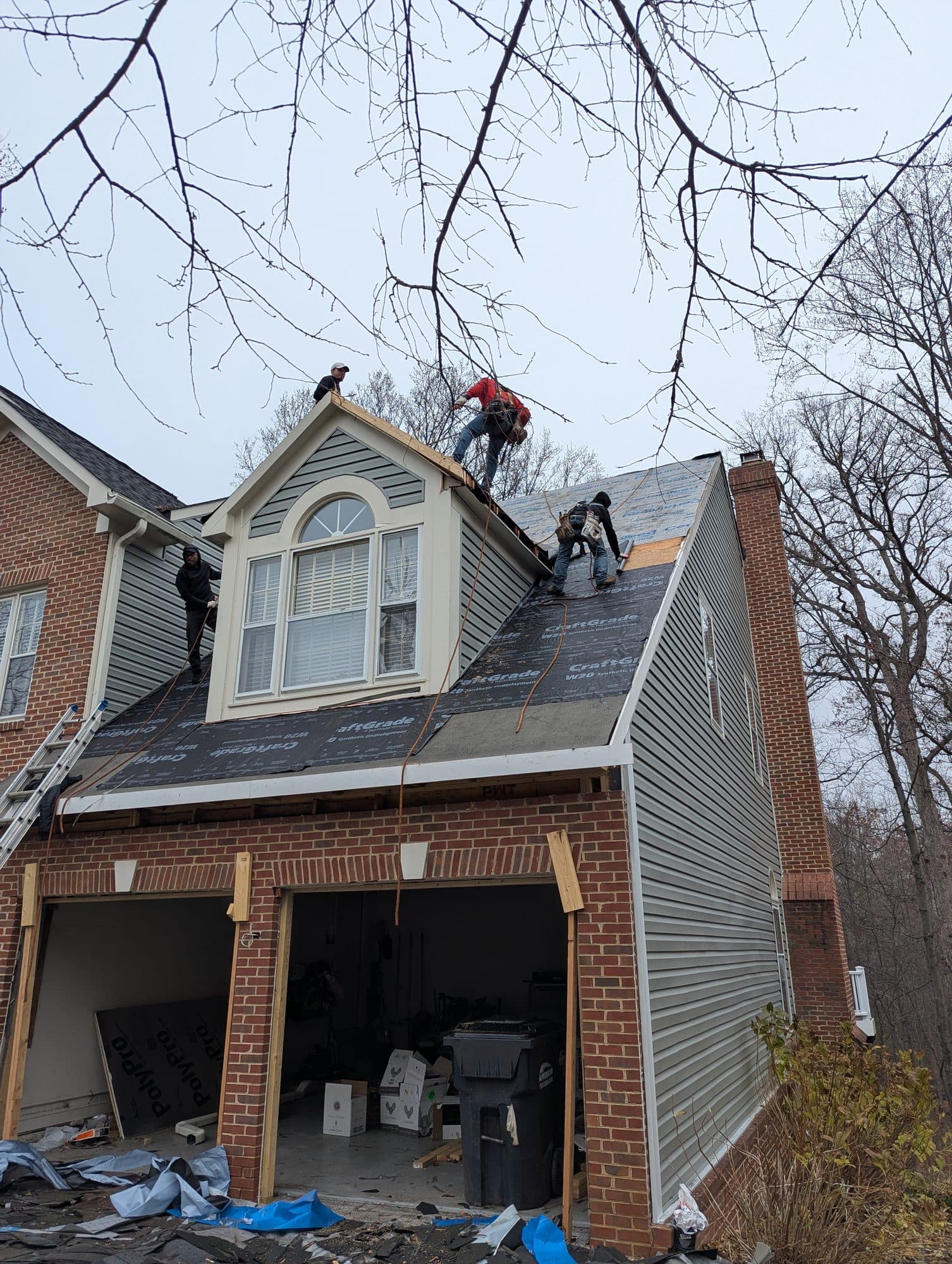
Chimney and skylight details from a McLean roofing project, and dormer and chimney flashing work on a Reston re-roof. None of these photos are from Ashburn.
Walls, dormers and bump-outs
Ashburn colonials and townhouses often have a lower roof that runs into a second-story wall, a dormer, or a bay bump-out. Those roof-to-wall joints rely on step flashing tucked behind the siding. If it was never lapped properly or the siding was installed tight against it, water can get behind the wall and appear inside some distance away.
How to tell where a leak is coming from
- Note where the stain is and whether it grows during rain from a particular direction.
- Check the attic above the stain with a flashlight for wet wood, damp insulation or daylight.
- Remember that water runs along rafters before it drips, so the source is often uphill from the stain.
- Notice whether the leak appears only in heavy rain, only in wind-driven rain, or in cold weather, which can point to condensation.
Do not wait on a small leak
A small leak around a vent or skylight can seem harmless if it only drips in heavy rain. The problem is what you do not see: wet decking, damp insulation that stops insulating, and drywall that slowly stains and softens. In an attic, water can soak into the wood for months before anything shows up below. Getting a leak traced early usually means a simpler repair, and it lets you plan rather than react if the roof turns out to need more.
If your roof is from Ashburn's 1990s and 2000s building years and you are seeing leaks at more than one penetration, ask for an honest look at the whole roof, not just the spot that is dripping.
How the repair should work
A lasting repair fixes the flashing or boot that failed rather than adding more sealant on top. That can mean replacing a pipe boot, re-flashing a skylight, installing new step flashing and counter-flashing at a wall or chimney, and replacing the shingles around the area. Roofing Roughnecks' roof repair service covers leak diagnosis, damaged shingle replacement, flashing repair and ventilation corrections. If the roof around the leak is worn out, we will tell you that replacement may be the better long-term fix.
Related
Can a leak around a skylight be fixed without replacing the skylight?▸
Often, yes, if the skylight unit is sound and the flashing is the problem. Re-flashing it properly is the usual fix.
Why does my ceiling stain appear far from the vent pipe?▸
Water can travel along the decking and rafters before it drips, so the stain often appears downhill from the actual entry point.
Is caulk a good fix for a chimney leak?▸
It may slow a leak temporarily, but lasting repairs use proper step flashing and counter-flashing.