Why the attic matters to the roof
Northern Virginia has hot, humid summers and cold winters. In summer, a poorly ventilated attic gets very hot, which bakes shingles from below. In winter, warm, moist air leaking up from the house can condense on the cold underside of the roof deck, leading to staining, mildew and, over time, deteriorated decking. Good ventilation moves air through the attic so both problems are reduced.
Intake and exhaust
A balanced system has intake low on the roof, usually soffit vents under the eaves, and exhaust high on the roof, such as a ridge vent along the peak. Cool air enters low, warm air leaves high. Problems arise when one side is missing or blocked: plenty of exhaust with no intake, or soffit vents that have been painted over or packed with insulation.
Ridge venting on our Ashburn project
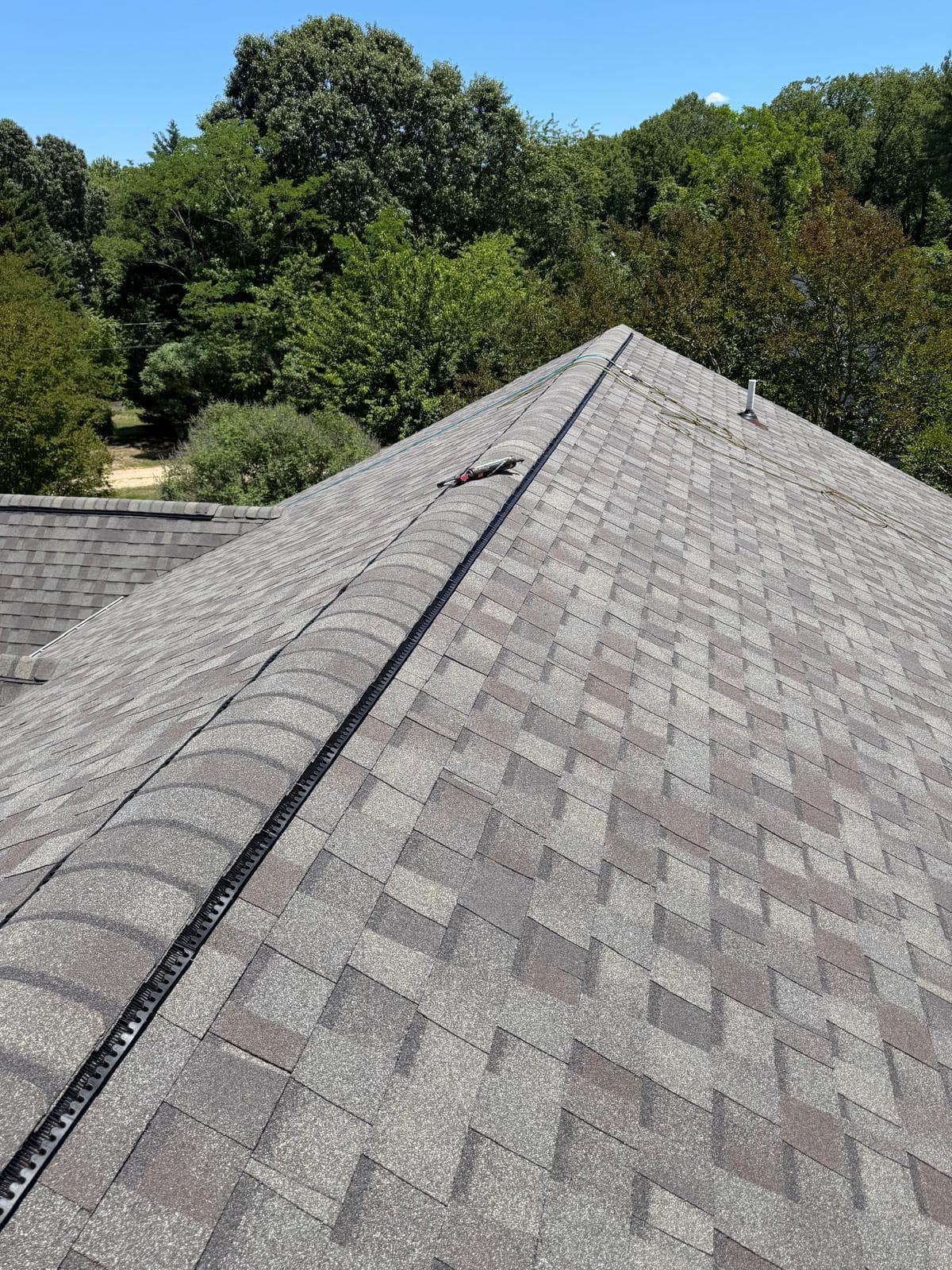
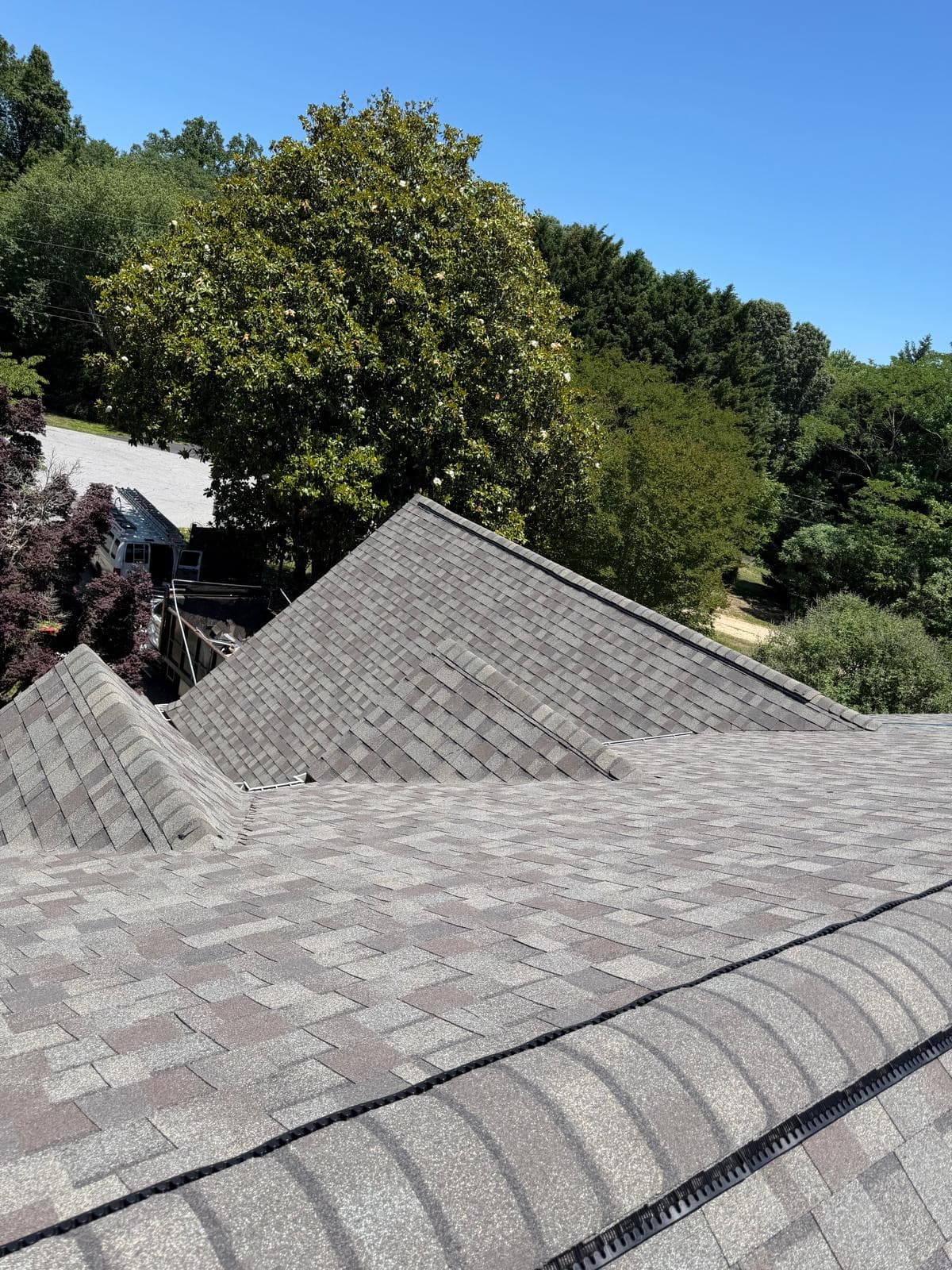
On the Ashburn roof we replaced, new ridge venting was installed along the ridge of the multi-gable roof. Ridge vents run continuously along the peak and sit low under the ridge cap shingles, so they provide exhaust without adding a row of boxes to the roof. Whether a ridge vent is the right choice depends on the roof's shape and the amount of intake available.
Insulation and air sealing
Insulation keeps heat in the living space, and air sealing keeps moist indoor air out of the attic. Both affect the roof. Insulation pushed tight into the eaves can block soffit vents. Gaps around light fixtures, attic hatches and bathroom fans let humid air rise into the attic. Bathroom and kitchen exhaust fans that dump into the attic instead of venting outside are a common source of moisture.
Roofing Roughnecks is a roofing contractor, so our focus is the roof side of the system: vents, decking and the roof edges. When we see insulation blocking intake, fans venting into the attic, or other moisture sources, we point them out so you can decide how to handle them.
Signs of attic trouble
- A very hot attic in summer, or frost and condensation on nails and decking in winter
- Dark staining or mildew on the underside of the roof deck
- Damp or compressed insulation
- Ice buildup at the eaves during cold snaps
- Shingles aging unevenly, with some slopes deteriorating faster
What to ask during a replacement
- What ventilation does the roof have now, and is it balanced between intake and exhaust?
- Will the scope add or change any vents, such as a ridge vent?
- Are the soffit vents open, or blocked by paint or insulation?
- Is there any sign of moisture or deteriorated decking from below?
- Will the new vents be listed in the written scope?
Every Roofing Roughnecks full roof replacement includes a ventilation review, and any changes are part of the written scope. Doing it during replacement is far easier than trying to retrofit a new roof later.
What tear-off can reveal
Some attic problems only become fully visible once the old shingles and underlayment are off. Long-term condensation can leave decking soft, delaminated or stained, especially near the eaves and around bathroom fan outlets. That is why a full replacement scope includes decking repair where needed. If tear-off reveals damage, we show you, explain it, and document the change before going further, so the new roof goes onto a sound deck rather than over a problem.
This is also the moment to correct the ventilation that caused the damage in the first place. Replacing rotten decking without fixing the airflow that rotted it only resets the clock.
Ask that any decking replaced during tear-off be noted with its location and extent, so your records show exactly what was done.
A note on Ashburn homes
Many Ashburn homes were built quickly during the 1990s and 2000s, and townhouses in particular have compact attics with limited room for airflow. Each attic is different, so there is no single rule, but an original roof is often the first chance in decades to look at how the attic is breathing.
Related
Do I need a ridge vent?▸
Not always. It depends on the roof shape and on how much intake the attic has. A ventilation review during replacement answers the question for your roof.
Can poor ventilation shorten a roof's life?▸
It can contribute to heat and moisture problems that affect shingles and decking. It is one reason two roofs of the same age can be in different condition.
Do you add insulation?▸
Our focus is the roof: vents, decking and edges. If we see insulation blocking airflow or moisture coming from below, we will point it out.